New pieces added regularly — follow us on Facebook & Instagram

Microfauna and Common Pests
Not everything small that moves in your terrarium is a problem. In fact, most of it is exactly the opposite. Understanding who’s who in your miniature ecosystem is one of the most important things you can do as a terrarium owner — and it will save you from reaching for a spray bottle when you should be leaving well alone.
Many of the creatures you’ll find in a Garden, Gifts & Glass terrarium have arrived naturally via plants and cuttings grown in a working FNQ greenhouse and garden. This isn’t a sterile environment — it’s a living one. That’s the point.
Springtails — the first responders
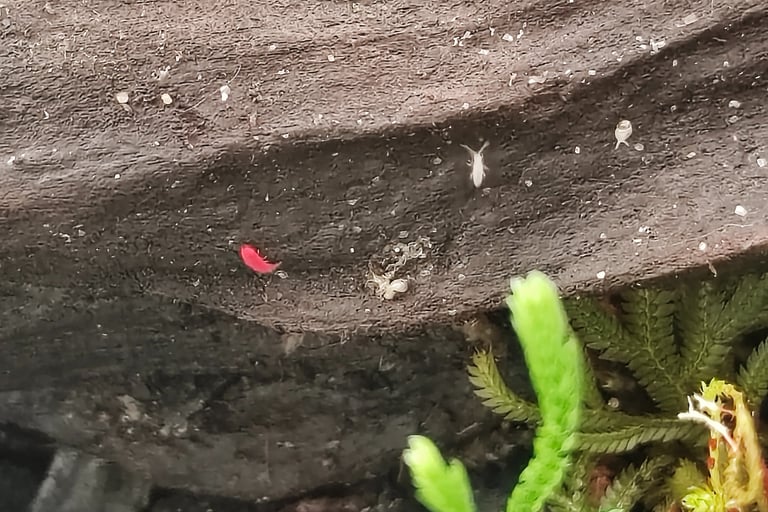
Springtails are tiny, white, and move fast. They live in the soil and on decaying matter, and if your terrarium has them, it is functioning exactly as it should. I add springtails to every terrarium I build — they are not an accident, they are a deliberate and essential part of the ecosystem.
What they do:
• Break down decaying organic matter before it becomes a problem
• Eat mould and fungal growth — preventing the spread before you even notice it
• Aerate the soil as they move through it
• Self-regulate — their population rises and falls with the available food source
***Springtails do not eat living plant tissue. They cannot harm your plants. If you see them on a leaf, they are eating something microscopic on the surface — not the leaf itself.
If the population seems low
In the first few weeks, offer tiny amounts of supplementary food to help the colony establish:
• A grain-sized piece of mushroom
• A thin slice of cucumber
• A pinch of brewer’s yeast
• 1–2 grains of uncooked rice
Remove anything uneaten after a few days. Once established, they’ll find everything they need on their own.
If the population explodes
A springtail boom almost always means one thing — too much moisture or decaying matter. The springtails are not the problem. They are responding to the problem.
• Stop supplementary feeding
• Check moisture — over-watering is almost always the culprit
• Remove the lid to increase airflow
• Remove any visibly decaying plant matter
• Wait — the population will regulate itself once the food source reduces
Isopods & Slaters — the composters
Isopods — known in Australia as slaters — are the larger members of the cleanup crew. Where springtails handle the microscopic work, isopods tackle bigger pieces of decaying matter, breaking them down and returning nutrients to the soil. If you grew up turning over rocks and finding little grey armoured bugs that curl into balls, you already know these guys.
What they do:
• Break down larger pieces of organic waste — dead leaves, wood, waste matter
• Work alongside springtails to keep the substrate healthy
• Help prevent anaerobic (airless, smelly) pockets forming in the soil
• Contribute to the long-term balance of a closed or semi-closed ecosystem
Isopods occasionally nibble on soft plant material if food is scarce. If you notice this, add a small piece of dried leaf or cork bark as an alternative food source — they’ll leave the plants alone. You can also feed them a small piece of sweet potatoe.
Worms — the soil engineers
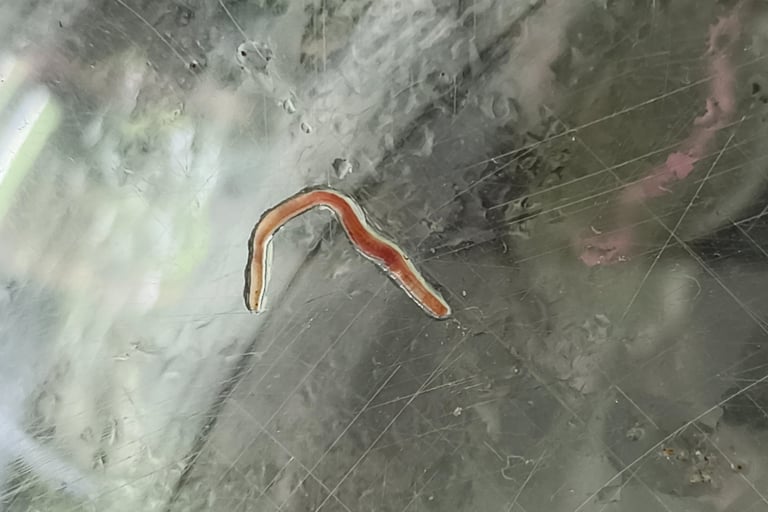
Finding a worm in your terrarium is a very good sign. Worms aerate the soil as they move through it, break down organic matter, and leave behind castings that are genuinely excellent for plant health. In FNQ, where soil life is abundant, worms can hitchhike in via plants and potting mix — and honestly, let them stay.
What they do:
• Aerate compacted soil by tunnelling through it
• Break down organic matter and return nutrients to the substrate
• Improve drainage and soil structure over time
Worms need moisture to survive. If your terrarium is running well and staying humid, a worm will thrive in it. If conditions dry out, they’ll struggle — another reason to keep moisture levels stable.
Symphylans / milipedes— the tiny centipede-looking things
If you find what look like miniature centipedes moving quickly through the soil — pale, fast, many-legged — these are most likely symphylans. They are common in rich organic soil across FNQ and are regularly found in healthy garden beds, compost, and yes, chook cages with plenty of decaying matter. They arrive in terrariums via plants and potting mix from living, working gardens.
In small numbers, symphylans are decomposers — they are there for the same reason as the isopods and springtails, doing the same kind of work. They are part of a thriving soil ecosystem, not a pest.
What to watch for:
• Small numbers going about their business — leave them alone
• Very large populations can occasionally nibble fine plant roots — monitor but don’t panic
• If plants show unexplained decline alongside a large symphylan population, reduce moisture and organic surface matter to bring numbers down naturally
These creatures showing up in your terrarium means your plants came from somewhere genuinely alive. That’s not a flaw — it’s a feature.
Jumping spiders — the welcome visitors
Jumping spiders are an FNQ constant — bold, curious, and entirely harmless. If one finds its way into your terrarium, it almost certainly arrived via a plant from the greenhouse or garden. They are predatory, which means they will eat fungus gnats, small insects, and anything else moving that they can catch.
They are not a permanent resident of a terrarium ecosystem — they need more space and more prey than a closed environment can sustain long-term. If you find one, you can gently relocate it or simply enjoy the visit. Either way, it has done nothing wrong.
A jumping spider in your terrarium is a sign your plants came from a living, breathing outdoor environment. They are one of the most charming creatures in FNQ and deserve nothing but respect.
Fungus gnats — the one actual pest
Fungus gnats are the one pest you are genuinely likely to encounter in FNQ — the humidity and warmth create perfect conditions for them. They are small, dark, and fly slowly. The adults are mostly harmless annoyances; it’s the larvae in the soil that cause damage by eating plant roots and organic matter.
The underlying cause is almost always the same: too much moisture on the soil surface, or too much organic matter sitting where the gnats can reach it. They don’t appear out of nowhere — they come in on plants or potting mix and thrive when conditions suit them.
**Despite my best efforts — sometimes fungus gnats happen. It's not a reflection of the build, the plants, or the care taken. It's just nature doing what nature does. Here's how to deal with it.
Prevention — the best approach
• Before any plant goes into a terrarium, drench it in a diluted neem oil solution and allow it to drain and settle fully
• I add the springtails after I have watered the terrarium and continue to monitor — Springtails will manage the fungal growth and organic matter that gnats need to breed
• Avoid overwatering — a persistently damp surface is an open invitation
• Allow the top layer of substrate to dry slightly between waterings in open terrariums
Active infestation....
• Spray affected areas lightly with diluted neem oil — it disrupts the larval cycle in the soil
• Remove the lid and increase airflow — gnats thrive in warm, stagnant, moist conditions
• Place yellow sticky traps near the terrarium to catch adult gnats and reduce the breeding population
• Reduce watering until the infestation is under control
Neem oil and springtails: Neem oil can harm springtails if applied directly and heavily. If you need to spray during an active infestation, give your springtail colony a day or two before treating if the situation allows. Applied lightly and allowed to dissipate, the colony will recover. This is why the preventative drench — done before planting, before springtails are added — is always the better approach.
Nematodes are sometimes recommended for fungus gnats. In three years of FNQ terrarium building, I have not found them reliable or worth the cost. Neem oil, airflow, yellow sticky traps, and a healthy springtail colony will do more.
The FNQ reality — expect the unexpected
Far North Queensland is one of the most biodiverse places on the planet. The plants in your terrarium came from a living, working tropical garden and greenhouse where the soil is teeming with life — some of it familiar, some of it extraordinary, and occasionally some of it that neither of us can immediately identify.
Alongside springtails, isopods, worms, symphylans and millipedes you may also find:
Mites — tiny, fast moving, various colours. Mostly beneficial predatory or decomposer species doing quiet, useful work in the substrate.
Beetle larvae — pale, grub-like, usually harmless decomposers breaking down organic matter in the soil.
Earwigs — occasional visitors, mostly harmless, eat decaying matter and mind their own business.
Pseudoscorpions — tiny, look exactly like scorpions without the tail. Completely harmless, predatory on other small bugs, and genuinely one of the most exciting things you can find in a terrarium. If you spot one, consider yourself lucky.
Juvenile millipedes — hatch in clusters and can appear in the hundreds at around a centimetre long. Black, slow moving, and doing exactly the same job as the adults. Give them time and they'll settle.
And occasionally — things that defy easy identification entirely. I live in FNQ. I see things I have never seen before in my life. If something turns up in your terrarium that you cannot name, the chances are it arrived from one of the most extraordinary ecosystems on earth and it is probably on your side.
Remember — in a healthy terrarium ecosystem, most creatures are beneficial. The instinct to remove or spray is usually the wrong one. Observe first, act only if you see actual damage, and trust the tiny workforce you can't always see.
Thank you for visiting. These worlds are made from nature, imagination, and many quiet hours of creating.
Quicklinks
Legal
© 2026 Michelle Lam/Garden, Gifts & Glass. All rights reserved.
Designed by Digital Reef Solutions